
What Is Post-Production?
Once filming, the production stage, wraps on any video content we watch, whether it's a documentary, a music video, a film, or a commercial, the real process begins: post-production. This stage is just as important as production itself, and it's here that a video gets its final form. Let's take a look at everything covered under this umbrella term for post-shoot work (post production): from adding subtitles to color correction, from special effects to voiceover.

Stages of Post-Production
There's a saying at video production companies: "we'll fix it in post." It means that most issues that come up during filming can be resolved at the post-production stage. In other words, post-production isn't just editing: it's also the process by which problems get corrected.
Let's quickly go through what actually happens in post-production. Of course, these stages vary from project to project. For example, editing might take very little time for a live music performance shoot, while for a music video, editing alone can take up 80% of the project's total timeline.
Editing
During editing, the raw footage that was shot is selected. Unwanted parts are cut and the footage is arranged into a sequence. This sequence is then refined according to the script, allowing the project to move on to the next stages.
Sound Design and Music
After editing, music and sound effects are added to establish the desired mood and flow. A sound effect might be as simple as a car door closing, or as impactful as the sound of footsteps building tension in a scene.
One very important point to be careful about here is that using music and sound effects requires paying for the licensing rights.
Visual Effects
Visual effects vary enormously from project to project, but they're generally one of the most crucial elements of any production.
Visual effects work can mean editing a scene shot on a green screen, or adding muzzle flash to a gunfire scene.
Sound Mixing
Once sound design, added music, and the dialogue captured on set come together, we end up with 3 separate audio channels. To make sure dialogue is clearly audible, that ambient café noise doesn't overpower other sounds, and so on, all the channels are mixed scene by scene.
Color Grading
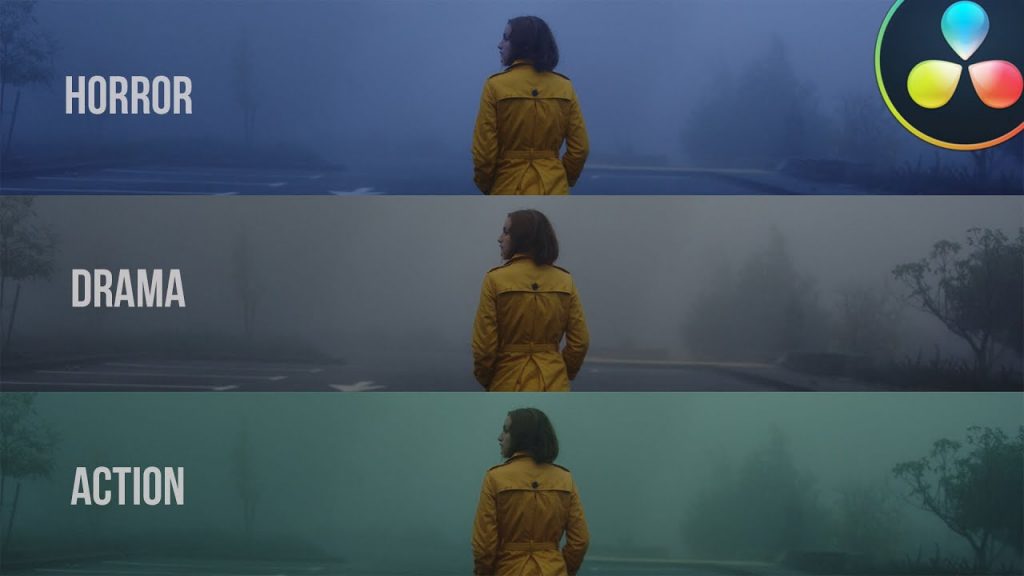
Once everything else is finished, color grading, shaping the emotion the viewer should feel, is one of the most important final touches. Since footage is usually recorded in LOG, color grading is essential, and it's the step that gives the video its finished look. As you can see in the image below, the same scene can be graded differently to evoke horror, drama, or action.
In the film industry, there are people whose sole job is color grading: this profession is called a "Colourist."
Post-Production Services
The filming stage of a video is important, but what happens after filming is just as important. In fact, in some cases, mistakes made during filming can be fixed at the post-production stage.
Most of the steps described above actually require real expertise: from knowing what level dialogue audio should sit at, to preserving accurate skin tones during color grading, there are complex details involved.
Post-production companies specialize in exactly these areas and invest in dedicated equipment and skilled talent.
As important as post-production is, pre-production is the stage where the entire project gets planned. You can also check out our article on what pre-production is.
For important video productions like promotional film production, a post-production agency becomes even more valuable.
Post-Production Agencies
Here's a quick rundown of why you should work with a post-production agency:
- Visual effects require access to very powerful computers
- Color grading requires specialized software and calibrated professional monitors
- Sound mixing requires headphones and audio equipment built specifically for the job
To find out how we can be part of your projects and what we can do for you, get in touch with us.
Frequently Asked Questions
What are the stages of post-production?
It consists of 5 core stages: editing, sound design and music, visual effects, sound mixing, and color grading.
What does "we'll fix it in post" mean?
In the video production industry, it's an expression meaning that technical or visual issues that come up during filming can be resolved during the post-production stage.
Why is color grading important?
It gives the video its intended emotional tone (such as horror, drama, or action); it's especially essential for footage shot in LOG format.
Why does post-production require a professional agency?
Visual effects need powerful computers, color grading needs calibrated professional monitors, and sound mixing needs dedicated equipment: all of which call for a specialized team.